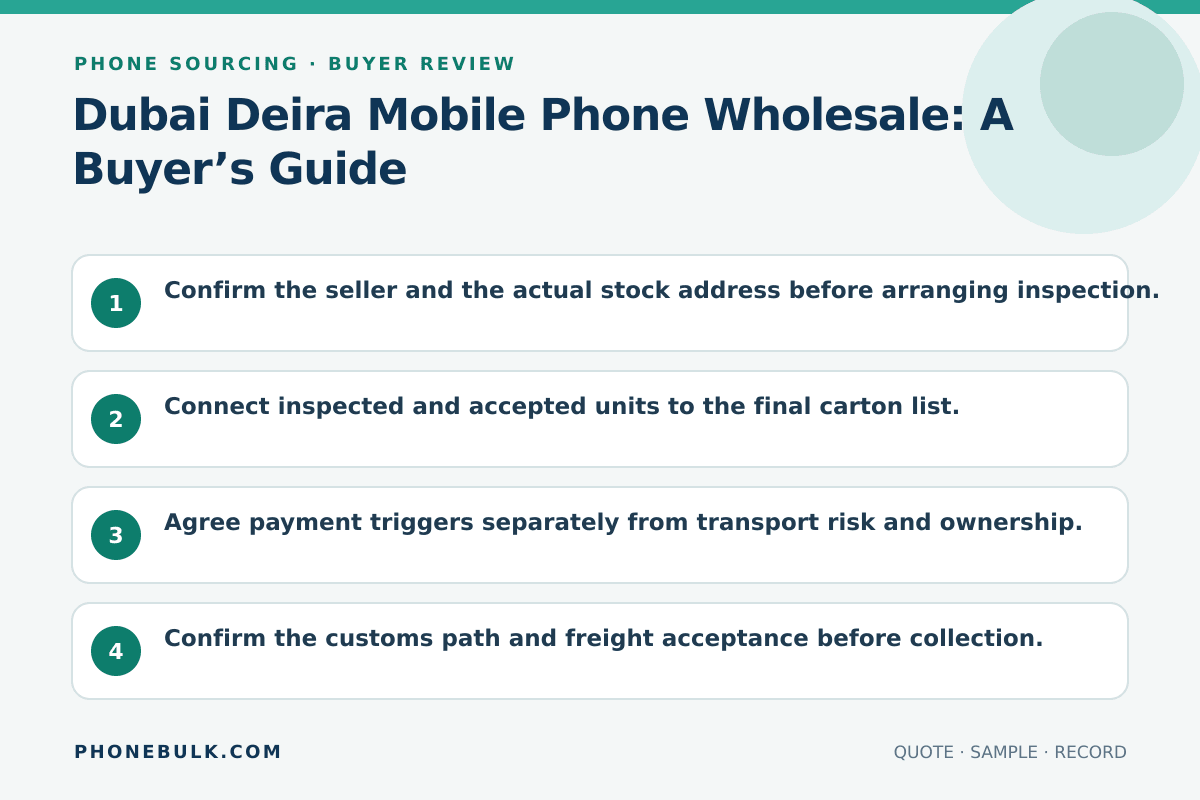
Key takeaways
- Confirm the seller and the actual stock address before arranging inspection.
- Connect inspected and accepted units to the final carton list.
- Agree payment triggers separately from transport risk and ownership.
- Confirm the customs path and freight acceptance before collection.
A shop visit can waste your sourcing budget if the quoted lot is somewhere else and cannot be inspected. Arrange the meeting, stock inspection and freight handover as separate appointments, with a named person responsible for each.
To source wholesale phones from Dubai’s Deira area, use the market visit to gather evidence for a specific order. Confirm the legal seller, the actual stock address, the model and regional version, and the inspection arrangement before discussing payment release. Then ask the declaring party and forwarder to identify the applicable export path and confirm acceptance of the battery configuration. This guide provides a visit plan and a purchasing file for new, used or refurbished lots. It does not certify Naif suppliers, quote live prices or establish an import entitlement in your destination country.
On a phone, swipe tables sideways to read every column.
Plan the Deira visit around verified appointments
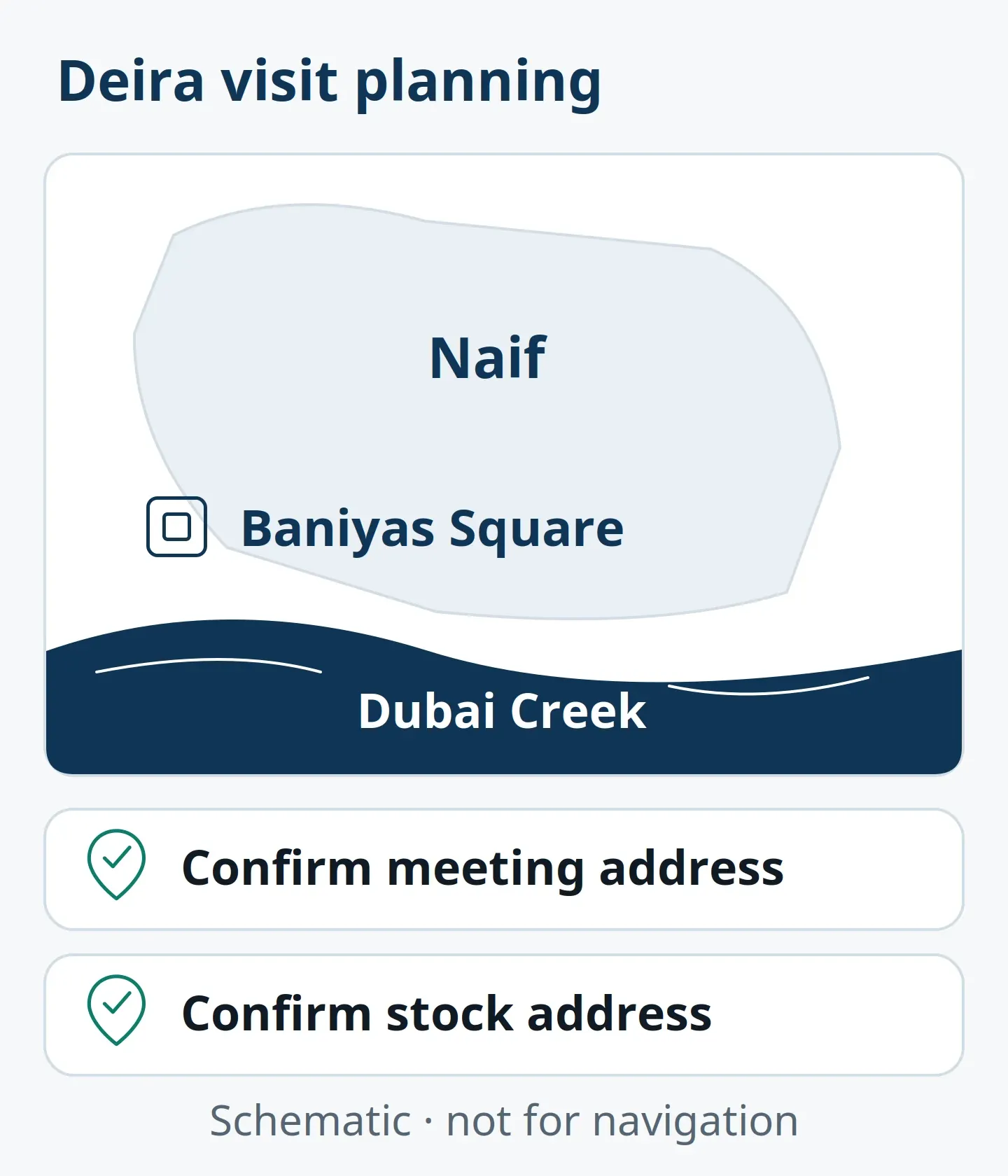
Use Deira and Naif as orientation labels, then navigate to confirmed business addresses. Naif Souk is a shopping landmark, rather than evidence that any nearby shop offers export-ready phone lots. Before travelling, ask each candidate where the quoted stock sits, who can open it for inspection and whether that appointment is confirmed.
Visit Dubai describes Naif Souk as a local shopping market. The RTA area map provides the Naif, Baniyas Square and Dubai Creek orientation used in this guide’s schematic. Use those official references for context, then obtain a current location pin directly from the meeting contact. Neither source is a phone wholesaler register. Visit Dubai’s Naif Souk page describes a local shopping market.
Our suggested visit order is seller meeting, stock inspection, then freight arrangements. A remote buyer can request the same sequence through a separately appointed inspector and forwarder. If the seller changes the stock address, reconfirm access before continuing. Return to the phone sourcing hub if you still need to decide which source market fits your order.
Takeaway: Book access to the offered stock, not just a meeting near a familiar market landmark.
Match the shop, seller and payee before reserving stock
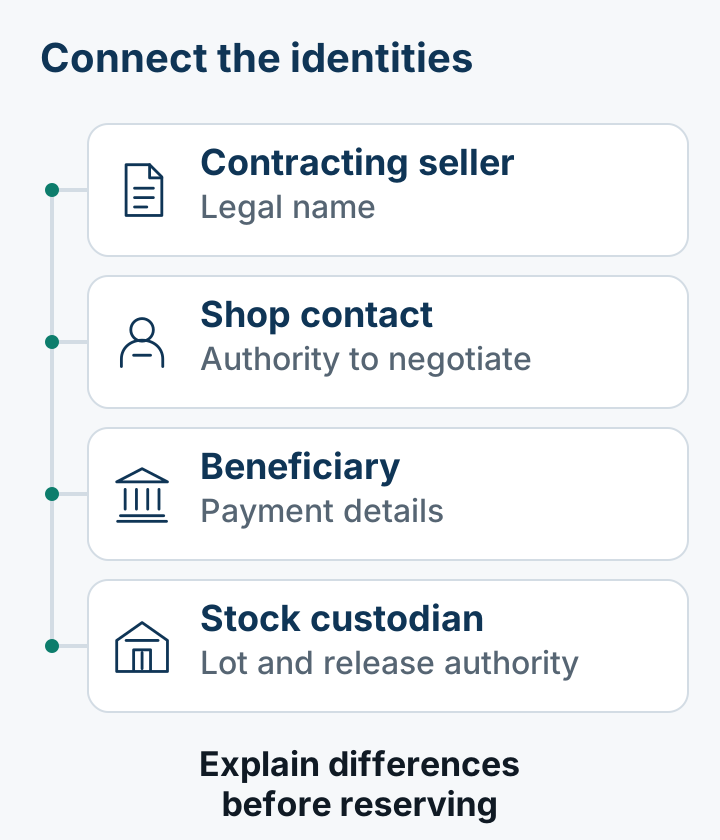
Identify who is selling the phones and who will receive your money before reserving a lot. Record the shop contact, contracting company, beneficiary and stock custodian separately. Explain any differences in writing; an address match is useful evidence, but it does not establish ownership of the phones or the quality of a batch.
Dubai’s official business directory supports searches by business name or Dubai Unified Licence number. Compare the result with the seller’s proposed contract details. If another licensing authority issued the licence, ask that authority how to verify it. Keep a copy of what you checked and when.
Swipe sideways on a phone to see the pause conditions.
Use the supplier verification guide for the broader identity checks. If documents or access are withheld, use the supplier red flags guide to decide what remains unresolved. These are purchasing checks, not a certification of any named business.
Common mistake: Treating a valid business listing as proof that the seller owns the offered lot or is an authorized distributor of every brand it advertises.
Takeaway: An unexplained difference between seller, payee and stock custodian is a reason to pause and obtain evidence.
Inspect the lot that will actually leave Dubai
Agree the acceptance criteria before inspection and connect the results to the goods released for collection. Ask the seller to distinguish unused, activated, used and refurbished stock in the offer. Record the exact model and regional version; assess mixed lots by their separate groups instead of treating the best sample as representative of every carton.
For iPhones, Apple’s preowned buying guidance covers physical inspection, Activation Lock, carrier lock, battery information and parts history. Those checks support an iPhone inspection; they do not validate an entire mixed-brand shipment. Ask for the relevant manufacturer checks for other devices.
Use regional-version checks and network compatibility checks to record destination requirements. For used lots, use the bulk phone QC checklist, with separate Activation Lock checks and carrier lock checks. No universal battery percentage or sampling rate is imposed here; write your agreed acceptance criteria into the order.
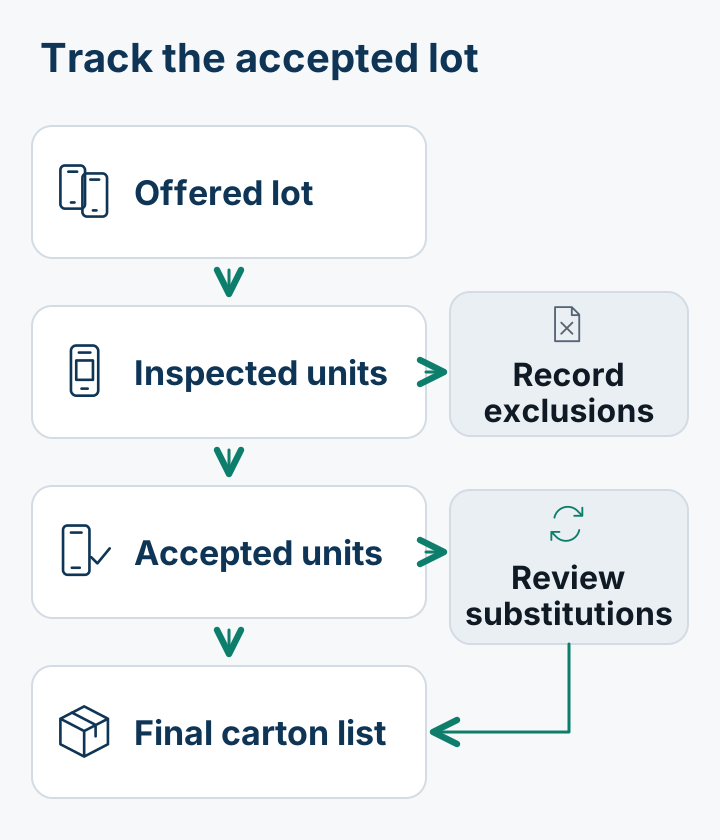
Request a final carton list after rejected units have been removed. If substitutions occur, record and review them against the same criteria before approving the revised list. A photo of a sealed carton does not explain what changed after inspection.
Takeaway: Tie acceptance to an identified lot and final carton list, rather than to a sample phone or shelf photograph.
Agree payment triggers separately from delivery terms
Write payment conditions, transport risk and ownership arrangements as separate parts of the transaction. Select a payment method that your seller and bank can actually support, then specify the evidence needed at each agreed release point. A freight booking or an Incoterm does not by itself prove that the lot passed inspection.
The ITA Trade Finance Guide explains the tradeoffs below. It describes international payment mechanisms, not the methods a particular Deira supplier accepts.
Swipe sideways on a phone to see the purchasing questions.
ITA’s limited-recourse warning concerns exporter non-payment risk. It also warns that document retention is less effective for air cargo. Ask the bank and forwarder whether goods release is actually controlled against payment or acceptance. Discuss availability and costs with your bank. There is no standard deposit share in this guide. If you agree staged payments, write the trigger, supporting record and person authorizing release for each stage. Obtain written handling terms for rejected goods and substitutions alongside the payment schedule.
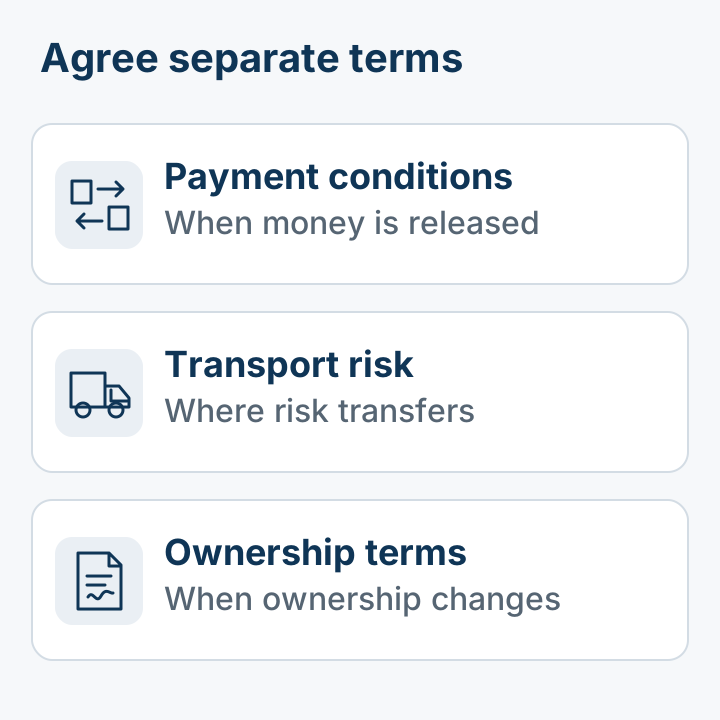
ITA’s Incoterms explanation distinguishes responsibilities for delivery from payment timing and ownership, which the rules do not settle. Record the rule, named place and version. For air cargo, ask for a suitable multimodal term: FCA can apply to any mode, whereas FOB and CIF are sea and inland-waterway terms. Use the phone importer Incoterms guide to review the delivery point.
Common mistake: Reading “FOB Dubai” on an air-freight offer as a complete agreement about inspection, payment and ownership.
Takeaway: Agree when money is released independently of where transport risk transfers and when ownership changes.
Identify the customs path before the forwarder collects
Ask the declaring party to explain the existing customs status of the goods and the proposed movement before collection. A Deira sales address does not identify whether the stock is locally cleared, in a free zone or under an import-for-re-export procedure. Treat the explanation as something to verify against documents for the offered lot.
Dubai Customs’ declaration service separates import, export, transit, transfer and temporary admission. Its general document list includes an invoice, packing list, certificate of origin and restriction permits. Ask the declaring party which documents and approvals apply to this movement.
The older Customer Guide, version 3.03, illustrates the distinctions below. Use it to understand the categories; obtain current requirements for the actual declaration rather than applying its historical amounts or deadlines.
The guide distinguishes import-for-re-export to Local from the subsequent re-export, and also describes FZ Transit Out. These describe procedures, not mutually exclusive warehouse locations. Ask the declaring party to complete the separate fields below for your lot; they are review inputs rather than an exhaustive procedure list.
Swipe sideways on a phone to see the evidence column.
Dubai Customs’ FAQ explains that declarations use a Customs business code and that appropriately licensed, registered and authorized clearing agents can act for consignees. Ask who will declare this lot, who authorizes that party and who keeps the resulting records.
The possible benefit of sourcing through Dubai is conditional: a buyer may be able to inspect or consolidate the desired stock there and arrange an accepted onward route. Evaluate that proposed arrangement against the alternatives. Do not turn “re-export” into a promise of tax savings, refunds or destination clearance. Request actual charges and use the landed-cost calculator with your own confirmed inputs.
Takeaway: Select the customs path from the goods’ documented status, not from the seller’s market address.
Give the forwarder a battery and carton record
Confirm freight acceptance using the shipment as it will be packed, including the batteries and any spare items. Give the forwarder the lot description, carton information and destination before authorizing pickup. Ask who prepares the shipment documents and who confirms carrier acceptance; an inspection pass and a freight acceptance serve different purposes.
IATA’s 2026 Battery Guidance Document distinguishes batteries alone, packed with equipment and contained in equipment. For batteries covered by its test-summary provisions, manufacturers and subsequent distributors must make the summary available; this does not mean a paper copy accompanies every shipment. Ask the shipping specialist to identify the applicable classification and required documentation for the actual configuration, rather than describing everything as generic electronics.
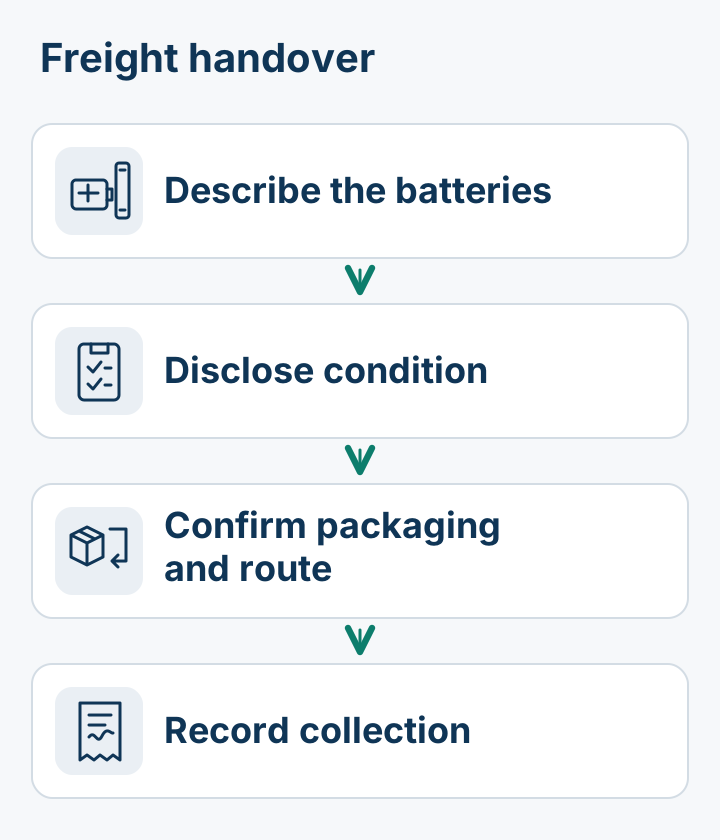
- Describe the batteries. State whether they are installed, packed separately or supplied as spares. Request applicable battery or equipment identifiers and a retrievable matching test-summary reference; resolve unavailable or unmatched records with the shipping specialist before freight approval.
- Disclose condition. Separate suspect battery safety defects from ordinary phone faults. Ask the specialist how affected units should be handled before offering them for carriage.
- Confirm packaging and route. Obtain the forwarder’s requirements and confirmation for the proposed carrier and destination.
- Record collection. Reconcile the final carton list, identifiers, package information and receiving acknowledgement with the accepted lot.
IATA prohibits air carriage of batteries with the dangerous safety defects it describes, including those installed in equipment. Its guidance also distinguishes other defects that do not create the same prohibition. Do not label all used phones as prohibited, or assume every return can travel by air. Request assessment of the actual units.
Keep carrier acceptance, customs records and the collection receipt together. None replaces a destination-country review of whether those models and conditions may be imported and sold.
Takeaway: Give the forwarder the actual battery configuration and condition before approving pickup.
When this does not apply
This guide supports commercial lot review, not an instant purchasing decision or a complete compliance determination. Pause the workflow when inspection cannot cover the offered assortment, the intended shipping route is unconfirmed or the destination’s acceptance requirements remain unresolved. Resolve the missing evidence before treating a Dubai purchase as ready to ship.
- Personal shopping or traveller baggage: use the relevant customs and airline passenger guidance; this commercial freight workflow does not establish baggage allowances.
- Unknown destination acceptance: ask the destination broker and relevant authority about the precise models, condition and required approvals.
- Safety-defective batteries or repair scrap: obtain a specialist handling assessment instead of using an ordinary phone-lot freight plan.
- Unexplained contracting or payment parties: resolve the relationship before using the rest of the checklist as a reason to proceed.
- An uninspectable assortment: narrow the offer or arrange a suitable inspection rather than accepting unspecified contents.
Takeaway: Missing access, identity or route evidence calls for clarification or a narrower order, not more confident assumptions.
Keep a sourcing file before the next order
Keep the evidence for the accepted lot in one file and use it to review any later offer. Record what was agreed, what was inspected, what changed and who approved collection. Start a new lot record for a repeat order; a previous transaction provides context but does not document the next shipment’s contents.
Add a decision record alongside the documents. Before each agreed payment or pickup approval, fill in the stage, lot/carton-list revision, evidence references, approver, outstanding exception and continue / pause decision. Keep the agreed ownership-transfer event separate from the delivery rule’s named place. At collection, add the receiving acknowledgement to the record; it cannot be evidence available before collection.
Use the phone wholesale RFQ template to request the lot and commercial fields from your own candidates. Add the Dubai-specific stock-address, customs-path and freight-acceptance fields above to your working file.
For further reading:
- China vs Hong Kong vs Dubai Phone Sourcing — compare hubs before committing to a Deira visit.
- Supplier verification — develop the counterparty record before discussing payment release.
- Bulk phone QC checklist — record acceptance and exceptions at the stock location.
- Landed-cost calculator — compare offers using your confirmed costs and quantities.
Takeaway: Leave the sourcing exercise with a documented decision about a specific lot and its next handover.
Method and source limits
This guide compiles official location references, business-search tools, customs guidance, international trade explanations and manufacturer inspection guidance. The visit sequence, matching checklist and purchasing file are editorial recommendations. They are not a report of a PhoneBulk market visit, a supplier investigation or a completed shipment.
The Dubai Customs version 3.03 guide supports the distinction between procedures; it is not used here to set current fees, tax rates or deadlines. IATA’s document is guidance for interpreting battery transport requirements, not evidence that a particular consignment complies. Confirm current transaction requirements with the responsible parties and authorities. The source list identifies the material consulted and its access date.
Takeaway: Use the official distinctions to ask better questions, then verify the answers for your own goods and route.
Frequently asked questions
Is it cheaper to buy a phone in Dubai?
A local price is not enough to decide. Compare the same model code, condition, accessories and delivery scope, then add the actual inspection, freight and destination costs. This guide has no live price evidence supporting a Dubai discount.
Where can I buy phones wholesale?
This page covers Deira lot review. For a choice between cities, read China vs Hong Kong vs Dubai Phone Sourcing in the further-reading links. A directory can identify candidates; wholesale terms still need a dated offer for a specific lot.
How to find wholesalers in the UAE?
See the seller-matching section for Dubai’s official business search. A matching record helps you investigate the company’s identity; it does not prove manufacturer authorization or ownership of stock. Treat discovery, identity checks and lot verification as separate decisions.
Which phone is best to buy in Dubai?
Begin with your resale channel and destination network, rather than the city or a flagship label. Ask for the exact model and regional version. Only shortlist a lot after its condition, lock status, expected support and destination acceptance meet your purchasing criteria.
How can I order a phone from Dubai?
For a remote bulk order, first establish whether your inspector can access the actual lot and who authorizes its release. If the stock custodian differs from the seller, request a written explanation and release arrangement. Follow the inspection and freight sections before authorizing collection.
Who are the wholesale distributors of Samsung products in the UAE?
This guide does not maintain a verified authorized-distributor list. If manufacturer authorization matters to your order, ask the manufacturer to confirm the proposed company and territory through its official contact channels. A trade licence or a seller’s brand logo does not establish that relationship.
Sources and methodology
- Naif Souk — Dubai Department of Economy and Tourism Accessed October 8, 2026.
- Union route network service map — Roads and Transport Authority Accessed October 8, 2026.
- Dubai business directory — Dubai Department of Economy and Tourism Accessed October 8, 2026.
- Submit Customs Declaration — Dubai Customs Accessed October 8, 2026.
- Customs frequently asked questions — Dubai Customs Accessed October 8, 2026.
- Customer Guide, version 3.03 — Dubai Customs Accessed October 8, 2026.
- Trade Finance Guide — U.S. International Trade Administration Accessed October 8, 2026.
- Know Your Incoterms — U.S. International Trade Administration Accessed October 8, 2026.
- If you want to buy a preowned iPhone — Apple Accessed October 8, 2026.
- Battery Guidance Document, revised for the 2026 regulations — International Air Transport Association Accessed October 8, 2026.
Update history
- — First published. Official sources on this page were accessed on this date unless a later note says otherwise.
Factual corrections after publication are listed on the corrections page. There is no separate reviewer identity on this desk. See the editorial policy.

About the author
Frank Dean
Frank Dean researches manufacturer, standards, and trade documents for PhoneBulk, then turns them into accept / clarify / reject buying guidance for resellers.
- Source-backed wholesale research
- Claim-level fact review
- Separation of official rule and trade practice