
Key takeaways
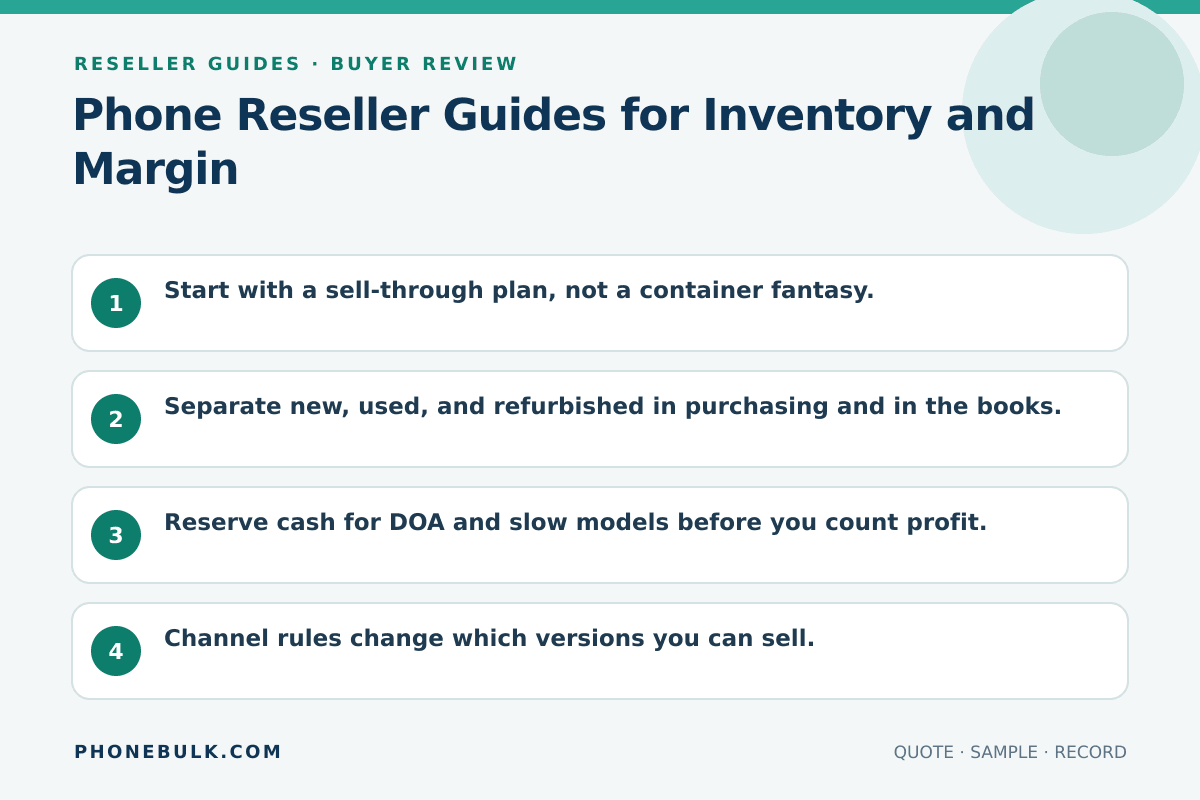
- Start with a sell-through plan, not a container fantasy.
- Separate new, used, and refurbished in purchasing and in the books.
- Reserve cash for DOA and slow models before you count profit.
- Channel rules change which versions you can sell.
- Use the start, margin, and inventory pages before you raise MOQ.
Reseller guides on PhoneBulk cover how a phone lot behaves after you buy it. They do not teach “start a phone empire this week.”
The practical question is smaller: can you identify, inspect, sell, and support the units in the lot without tying up the rest of your cash? A reseller plan should answer that before it talks about markup.
What belongs here
- Starting with a lot you can inspect and finish selling.
- Mix of unused, used, and refurbished.
- Single-unit margin versus lot-level cash.
- DOA and return reserves.
- Fast and slow models.
- Channel rules that change version and warranty.
Start with operations, not a container brochure:
- How to start phone reselling
- Profit margins
- Inventory planning
- Profit calculator
- Wholesale phones
- Used phones
Pick a route before you pick a lot
Start with how to start phone reselling if you have not completed a small order. That guide works backward from the sales channel and inspection capacity. It also explains why a low MOQ is not automatically a safe first order.
If you already know the channel, move to inventory planning. Separate units you expect to sell quickly from models that need a discount, a different outlet, or more support. Keep unused, used, and refurbished stock in different lines. They do not share the same QC work or return exposure.
Use the profit margins guide after you have landed cost, channel fees, and a DOA assumption. A unit markup ignores phones that fail or sit. The profit calculator makes the arithmetic repeatable, but it cannot tell whether the selling price or unsellable rate is realistic.
Match the guide to the buying problem
| Problem in the order | Read next |
|---|---|
| Quote has no usable version or lock detail | Wholesale phone RFQ template |
| Used lot has one vague letter grade | Wholesale phone grading |
| Freight and duty are missing from the margin | Landed-cost calculator |
| Supplier wants payment before a sample | Payment terms |
| Inventory contains several unspecified models | Mixed-SKU orders |
Records matter after the sale
Keep the supplier’s SKU list, the inspection result, and the version or lock disclosure attached to the lot. Those records help you answer a return without relying on memory. They also show whether the next order should repeat the model, lower the quantity, or change the inspection rule.
Do not mix a failed unit into a general “customer service” expense. Record why it failed: lock, IMEI status, battery, function, cosmetic grade, wrong version, or another stated reason. That is the information you need when you revise the next RFQ.
A first inventory test
If you cannot name the channel, the version, the inspection method, and the reserve for dead units, you do not have a reseller plan. You have a shopping list.
Frequently asked questions
How much money do I need to start reselling phones?
There is no honest universal number. You need enough to buy a lot you can finish inspecting, hold through slow units, and still cover DOA. A starter quantity that you cannot inspect is too large.
Is phone reselling a side hustle?
It can be small, but locks, IMEI, and consumer-law issues do not become smaller because the lot is small. Treat it as a trade with records.
Sources and methodology
- Creating helpful, reliable, people-first content — Google Search Central Accessed August 22, 2026.
Update history
- — First published. Official sources on this page were accessed on this date unless a later note says otherwise.
- — Substantive revision of the buying fields or source notes.
Factual corrections after publication are listed on the corrections page. There is no separate reviewer identity on this desk. See the editorial policy.

About the author
Frank Dean
Frank Dean researches manufacturer, standards, and trade documents for PhoneBulk, then turns them into accept / clarify / reject buying guidance for resellers.
- Source-backed wholesale research
- Claim-level fact review
- Separation of official rule and trade practice