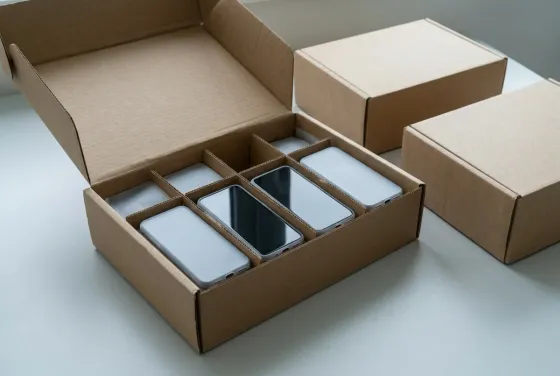
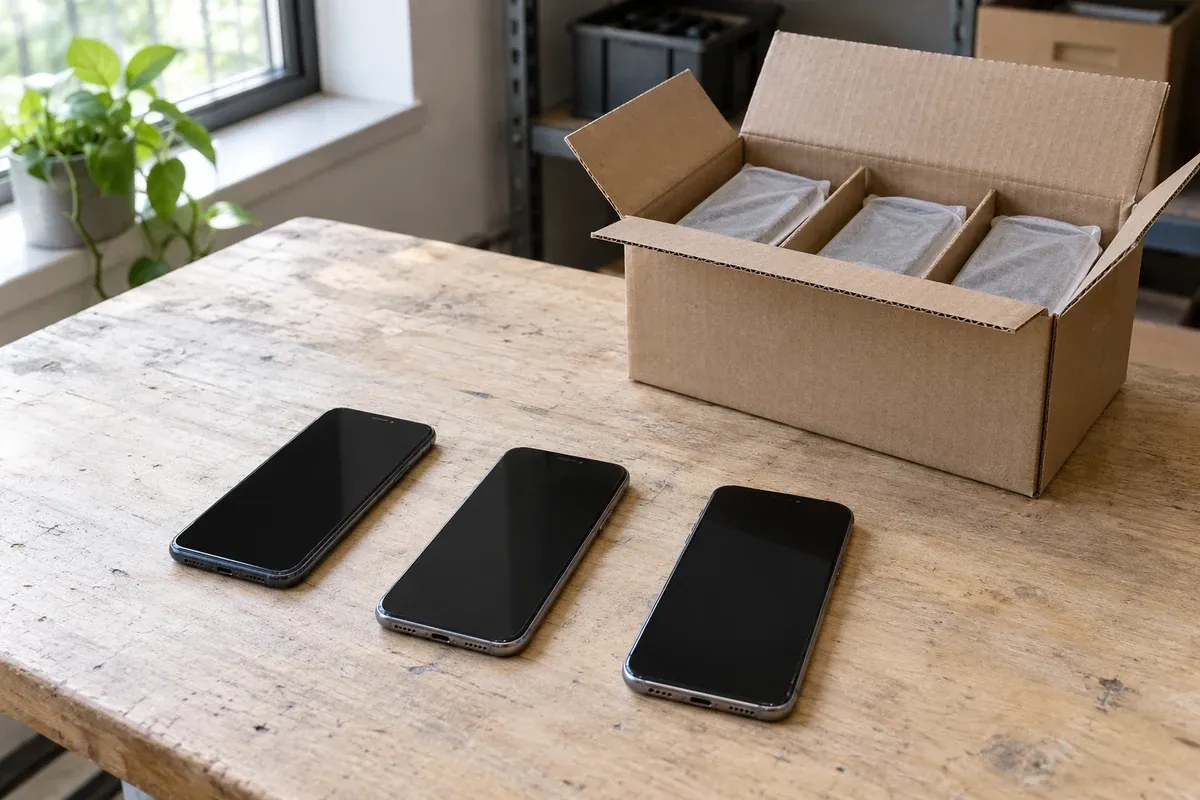
The customs code for a complete used smartphone starts with HS 8517.13 when the goods meet the smartphone description, but that is only the classification starting point. A commercial importer still needs the destination’s full code, the applicable origin and entry-date measures, a supported customs value and a review of whether the lot is reusable equipment or waste. This guide connects those checks in a working file for U.S. buyers, with separate Great Britain, EU and Hong Kong reference points. It does not establish a worldwide permission to import used electronics.
Start with the phone-sourcing decision guide if the seller, stock location or destination is still undecided. Here, the output is a customs-review file for a defined lot.
Which HS code fits the goods in the carton?
Classify what will actually cross the border. The WCO’s Chapter 85 lists smartphones under 8517.13 and other cellular or wireless telephones under 8517.14. Its smartphone definition refers to cellular telephones with a mobile operating system designed to perform automatic data-processing functions, such as downloading and running multiple applications simultaneously, including third-party applications. “Used” and “refurbished” do not replace that product description.
The U.S. International Trade Administration explains that the HS classification has six digits and countries add national extensions. The U.S. import system is the HTS; the export system is Schedule B. A full export number is not a substitute for checking the destination import number.
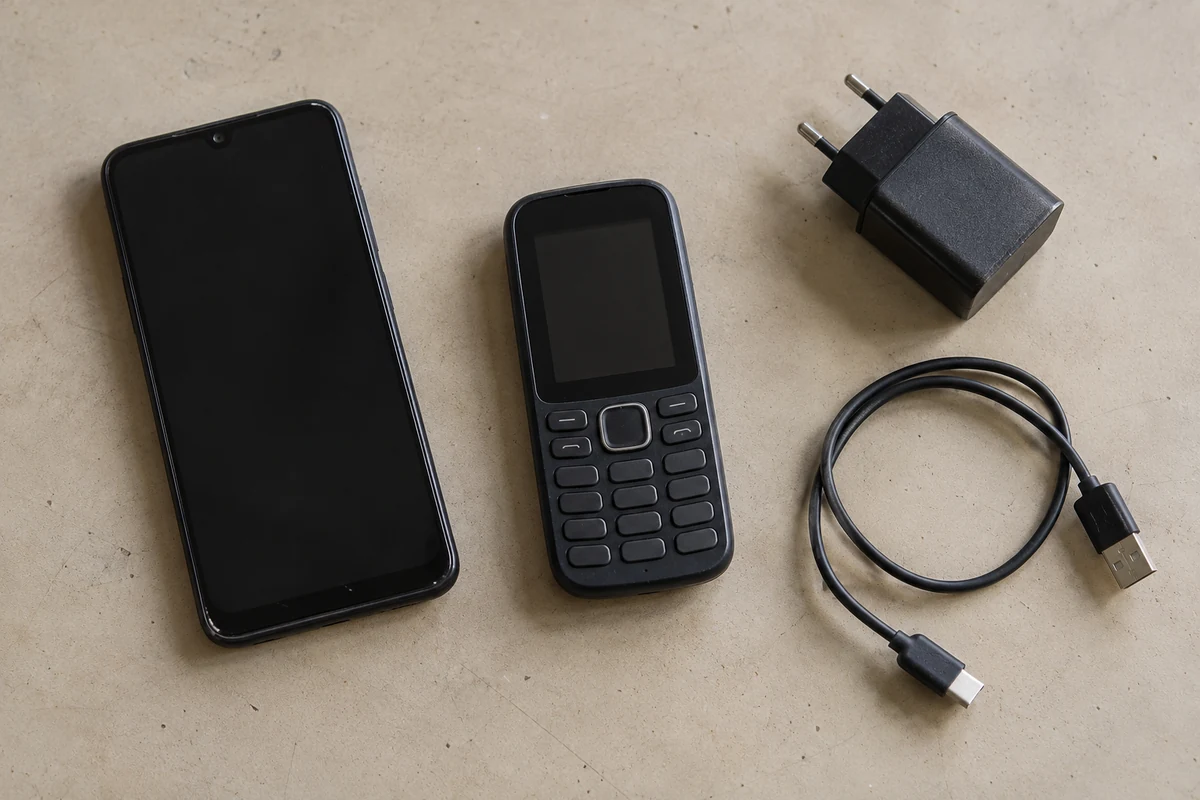
For an assortment, use the mixed-SKU order guide to record counts and versions before classification. Keep the condition and grading record alongside that list. A cosmetic grade describes the sale offer; it does not establish a customs classification or prove that every device works.
Common mistake: Copying one smartphone code onto a carton containing complete handsets, loose parts and chargers without reviewing the different goods.
Takeaway: Identify each kind of goods first, then confirm the destination’s full code.
What changes with the destination and origin?
Use a country-and-procedure check rather than a port-name rate chart. The tariff entry identifies the goods, while applicable measures can depend on origin and entry date. The shipping city does not itself establish origin. Keep the seller’s address, dispatch point and claimed origin in separate fields for the declaring party to verify.
The following reference points were checked on October 9, 2026. The rates are identified fields in official sources, not a total tax quote or a finding that a particular used lot may enter.
For a U.S. entry, the general “Free” field answers only that field. It is not evidence that all additional measures are absent. Ask the declaring party for the applicable entry-date treatment and the reason each additional measure applies or does not apply. Save that explanation with the tariff reference instead of storing only a headline percentage.
For the EU, the European Commission’s calculation guidance identifies tariff, value and origin as the key factors. The table deliberately leaves the shipment-specific rate for confirmation. An unchecked rate is not a zero rate.
Review the Incoterm and named place to identify who handles the relevant tasks and charges. A delivery term does not turn the rate table into a classification ruling.
Takeaway: Match the tariff lookup to origin, date and procedure before treating it as a budget input.
How should you record duty, import VAT and landed cost?
Keep a separate base and rate for each tax. For a charge assessed as a percentage, the working calculation is accepted assessment base × applicable rate. The difficult input is the accepted base, not the multiplication. Do not assume that the supplier’s invoice amount is the final customs value in every destination.
The Commission’s valuation guidance describes transaction value as the main EU valuation method, with additions and deductions; when it does not apply, other valuation methods are used in the prescribed order. For Great Britain imports, HMRC’s import VAT guidance explains that the VAT value includes customs value, relevant incidental expenses to the first UK destination and applicable import duties or levies. Avoid adding a cost twice when it is already included in the underlying value.
Use this worksheet as an editorial recording aid. It supplies no assumed phone price, freight quote or universal tax rate.
For the GB VAT line, ask the preparer to identify which transport, insurance and other charges belong in the base. HMRC also distinguishes paying import VAT from accounting for it on a VAT return, and recovery is subject to the applicable rules. Keep tax cash flow and nonrecoverable purchase cost as different questions.

After the bases and taxes are established, enter the relevant costs in the landed-cost calculator. Read its input definitions first: it works with the figures you supply and does not determine tariff classification or validate a tax rate. If you change from purchased units to saleable units, record the change in quantity basis rather than presenting both outputs as the same unit cost.
Common mistake: Combining duty and VAT into one percentage applied to the goods invoice, even though their assessment bases can differ.
Takeaway: Preserve the base, rate and source for each charge so someone else can reproduce the budget.
Is the lot reusable equipment or electronic waste?
Resolve intended use and actual condition before collection. A lot described as “refurbished” can still contain units requiring separate review. Waste classification and handset tariff classification answer different questions. A smartphone subheading does not authorize an international movement of waste or establish that a used lot is outside waste controls.
The EPA’s e-waste guidance describes Basel changes effective January 1, 2025 for cross-border e-waste and scrap destined for recovery or disposal, including hazardous and non-hazardous material. It also explains that U.S. trade involves a separate review of trading partners’ rules and relevant agreements because the United States is not a Basel Party.
The Environment Agency’s guidance for England says used electrical equipment exported for reuse must not be classed as waste, and destination requirements need checking because some countries do not accept second-hand electrical equipment. Those statements do not establish a common worldwide used-phone admission rule.
Our recommended reuse-review file connects the following evidence. The destination and exporting authorities determine what is legally sufficient; this table is a preparation checklist.
Use the bulk-phone QC checklist to build functional records, and keep relevant parts and service history with the same units. These checks support the file; they are not an environmental authority’s determination.

Common mistake: Treating a refurbished label and a photograph of neat packaging as proof that an entire mixed lot is non-waste.
Takeaway: Connect the goods’ intended use to their condition and records before relying on a reusable-equipment description.
What belongs in the declaration-review file?
Prepare a description that the declaring party can reconcile with the actual shipment. In the United States, CBP’s importer guidance states that the importer of record remains responsible for the correctness of entry documentation and applicable duties, taxes and fees even when using a customs broker. A broker’s participation is therefore a reason to improve the file, not to stop checking it.
The following is a recommended working file rather than a universal list of mandatory customs documents.
Use the phone wholesale RFQ template to request the model, condition and commercial fields from your own supplier. Add the customs, origin and reuse questions above to your working copy. Do not request a more convenient description than the goods support.
Takeaway: Give the declaring party one consistent lot description and a traceable explanation of value, origin and condition.
When this does not apply
This guide is a preparation aid for a defined commercial handset lot. Several situations need a different review before the handset workflow can be used:
- Waste, recovery or disposal shipments: obtain the applicable environmental classification and movement review rather than declaring them as resale phones by description alone.
- Repair, return or temporary-import procedures: ask about that specific procedure and its evidence; do not apply ordinary resale treatment automatically.
- Parts-only or complex mixed consignments: provide component specifications and presentation details for their own classification review.
- Personal baggage and gifts: passenger or gift treatment is outside this commercial-lot worksheet.
- Network, product or battery acceptance: customs code and tax treatment do not establish that the goods can be carried or sold. Review destination network compatibility and the phone shipping guide separately.
If the route or condition changes, reopen the affected check before collection. A calculation prepared for one consignment does not settle the new one.
Takeaway: Change the review when the goods, purpose or customs procedure changes.
Before you release the lot
Release approval should follow the resolved inputs, rather than a supplier’s promise that “customs is included.” First, match the final goods and cartons to the description and condition records. Next, obtain the declaring party’s code, origin and dated calculation. Finally, resolve any reuse, waste or destination restriction affecting that route.
Keep unresolved fields flagged as open verification items in your file. A zero tax rate, an accepted customs value and a non-waste conclusion are different results; one cannot stand in for the others. If a supplier offers to change the invoice description without changing the goods, pause and resolve the discrepancy.
Takeaway: Approve collection only after the file describes the actual lot and the unresolved route questions have been answered.
Method and limits
This guide compiles official product-classification, tariff, tax, customs and environmental guidance. The destination table distinguishes published tariff fields from shipment-specific measures that depend on origin and entry date.
The code references concern the stated goods, and the government guidance applies within each authority’s jurisdiction. Recheck the applicable tariff and route controls for the actual entry date before filing an entry declaration.
Takeaway: Use the official sources below to confirm the inputs for your shipment.
Key takeaways
- Classify the actual handset or component, rather than the seller’s refurbished label.
- A general duty rate does not establish the shipment’s total taxes and fees.
- Keep customs value, duty, import VAT and logistics charges on separate lines.
- Review reuse evidence and destination restrictions before approving collection.
Frequently asked questions
What is the HS code for iPhones?
For a complete handset that meets the smartphone definition, HS 8517.13 is the starting subheading regardless of brand. The U.S. smartphone entry shown here is 8517.13.00.00. Confirm the actual goods and destination code; a brand name alone cannot classify screens, other parts or waste.
What does the HS Code 85171400 represent?
At the HS level, 8517.14 covers other telephones for cellular networks or other wireless networks, distinct from the smartphone subheading. The final digits depend on the destination’s tariff. Check the handset’s actual functions against the legal description instead of copying an eight-digit code from a supplier invoice.
What is the HS code for accessories?
Accessories classify under their own tariff headings rather than the smartphone subheading. Identify each item and whether it is supplied separately or as part of a retail set. Give the declaring party the charger, cable or other item’s specifications and presentation so it can apply the destination’s classification rules.
What is the HS code for LCD screens?
A separately shipped screen needs its own classification review. Describe whether it is a display module or a larger assembly, its incorporated components and intended use. This complete-handset guide does not establish a screen code; using the smartphone code solely because the screen fits a phone is unsupported.
Do I need to pay import duty on second-hand goods?
Second-hand condition alone does not establish an exemption. Check classification, origin, destination, date and procedure. Even when the applicable ordinary duty is zero, import VAT or other charges may remain. Record a verified zero separately from a rate that has not yet been checked.
Is US customs really checking phones?
CBP’s importer guidance explains its authority to examine shipments and the importer’s responsibility for related preparation and handling costs. It provides no phone-lot inspection probability. Keep descriptions and records accurate rather than budgeting on an assumption that a small or used shipment will pass without examination.
Sources and methodology
- HS 2022 Chapter 85: smartphone definition and telephone subheadings — World Customs Organization Accessed October 9, 2026.
- Harmonized System codes and national classifications — U.S. International Trade Administration Accessed October 9, 2026.
- U.S. Harmonized Tariff Schedule smartphone lookup — U.S. International Trade Commission Accessed October 9, 2026.
- Official UK tariff data for commodity 8517130000 — UK Online Trade Tariff Accessed October 9, 2026.
- Paying VAT on imports: accounting and valuation — HM Revenue & Customs Accessed October 9, 2026.
- Calculation of customs duties — European Commission Accessed October 9, 2026.
- Hong Kong cargo clearance and tariff treatment — Hong Kong Customs and Excise Department Accessed October 9, 2026.
- New international requirements for electrical and electronic waste — U.S. Environmental Protection Agency Accessed October 9, 2026.
- Importing and exporting waste electrical and electronic equipment: England — Environment Agency Accessed October 9, 2026.
- Tips for new importers and exporters — U.S. Customs and Border Protection Accessed October 9, 2026.
Update history
- — First published. Official sources on this page were accessed on this date unless a later note says otherwise.
Factual corrections after publication are listed on the corrections page. Editorial responsibilities and review methods are described in the editorial policy.